
A few years into my career as an electrical engineer, I started feeling a strange stiffness in my fingers. It was winter and the office was cold so I figured it was just the temperature and I ignored it.
By spring I couldn’t ignore it anymore. The pain had moved from my fingers to my wrists, and I was starting to connect it to mouse use. I’m a fast worker – I click a lot, move quickly, rarely sit still. What I hadn’t appreciated was that I had recently shifted from a job that mixed lab work with computer time to one that was almost entirely screen-based. My hands weren’t ready for it.
What I tried first
The first thing most people suggest is a vertical mouse. I tried it and it helped a little but just for a while. Then the pain got worse and i was again at square one. I moved on to a Wacom drawing tablet with a pen, which felt more like writing than clicking and gave me some relief. However, that that stopped working quite quickly too.

By autumn I convinced myself to start seeing a physiotherapist. My first experience was frustrating with just some generic exercises that were actually making things worse. I’ve since heard the same story from many other people with RSI. The condition is genuinely underdiagnosed and not every practitioner has specific experience with it. I don’t say this to criticise anyone – just to warn you because it cost me a lot of time, pain, and frustration.
Over the following months I tried everything. Splints day and night, trackball, which still required thumb movement and hurst a lot, voice dictation software, great for typing but quite useless for cursor control. I also switched to my left hand, which lasted about two weeks before that started hurting too.
Then i started with the usual chek-up routine. I had MRIs, X-rays, ultrasounds, blood tests, rheumatological exams. Everything came back negative with no clear lesion, nothing broken. Nevertheless the pain was there, constant during day and night, stopping me from sleeping and doing any activity with my hands.
Around Easter it hit its lowest point. Cooking, using a fork, getting dressed – everything hurt. I was limiting all arm movement to try to protect my hands, which in hindsight was probably making things worse. I was exhausted and genuinely scared about my future at work. I was working at a startup I cared about and I didn’t want to give up my job but I also couldn’t keep going like this. The sum of the physcial pain plus the emotional stress really got to a point difficult to handle.
A cardboard box and a flip flop
At this point I got quite desperate and thinking about any possible differnt option. Every solution I’d tried still involved my hands. What if I took my hands out of the equation completely?
I searched online for foot-operated mice. Found one interesting product – the 3D Rudder – then discovered the company had gone bankrupt and nothing similar existed.
I then decided to try to make it myself. I started with a regular mouse on the floor and rested my foot on it. Cursor control was rough but it worked, although it was very unconfortable. To fix that, I took some cardboard and built a small box around the mouse, stuck a flip flop on top for grip. It camoe out quite ridiculous looking but it worked better than anything I’d tried in months.
Clicking was still missing so I bought some foot pedals – the kind musicians use – and mapped them to left and right click. Combined with voice dictation for typing, I could work again. Defientely not fast and not perfectly but after months of barely being able to hold a fork, being able to work again that felt like a lot.
Building something proper
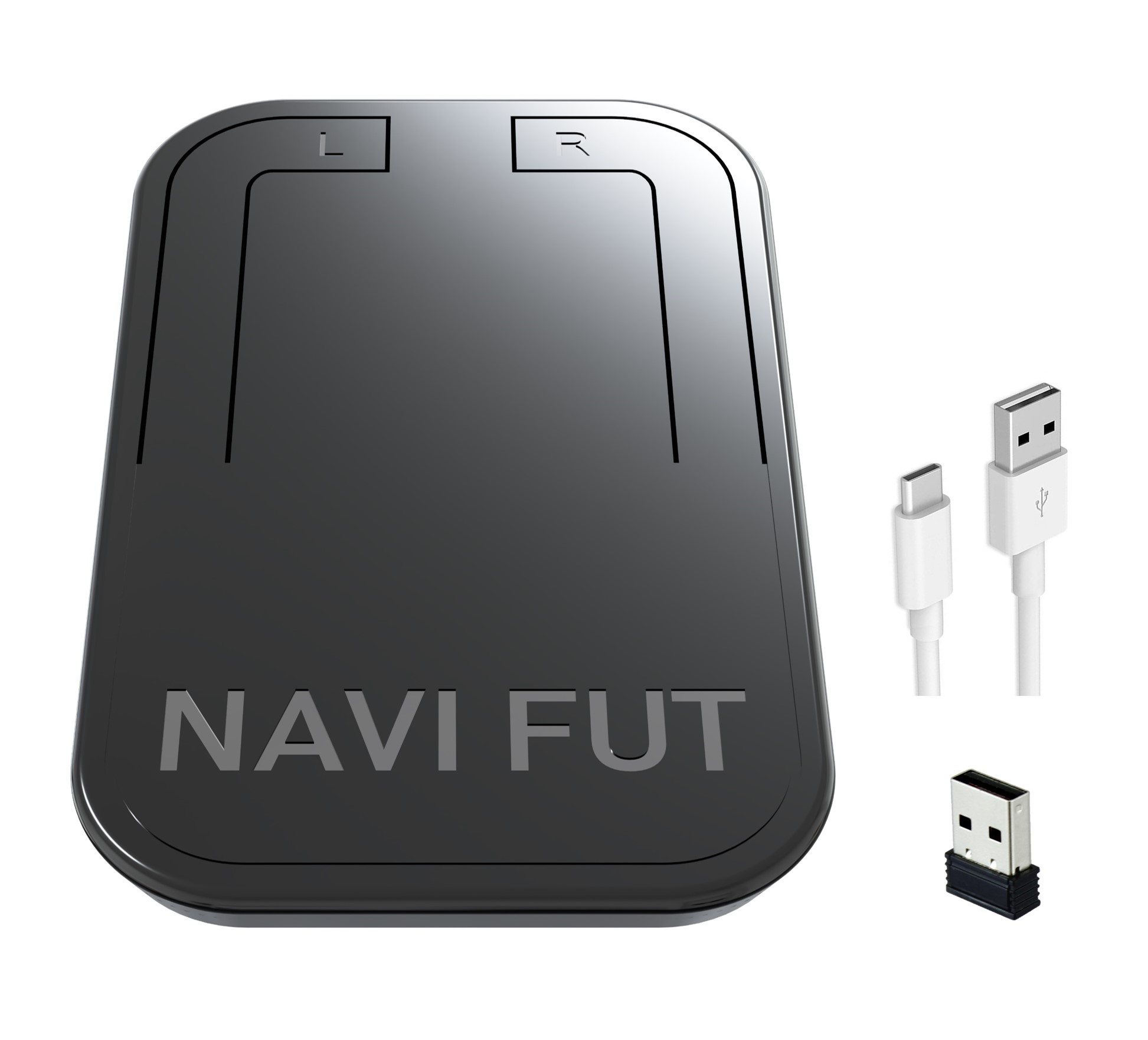
I have a 3D printer at home, so I started designing more adavance prototypes. I integrated the optical sensor, built-in click buttons, adjusted the top angle for comfort, optimized the button sizes and shapes and modifidie a lot of other small things that bothered me while using the foot mouse. Every version was designed and tested using the previous version of the foot mouse and gradually getting better.

The result, after many iterations, is the NaviFut xStep.
On recovery
I want to be honest about the medical side too. In my experience many practitioners were clearly not properly trained for this specific issue. They were excellent doctors for any trauma, broken tendon or bone but I always felt RSI was out of their training and expertise. I was prescribed steroid injections at two points that didn’t help at all and caused complications. I mention this carefully – not to tell anyone what to do medically – but because I wish I knew how important was to find an expert in this specific RSI field from the beginning.
What eventually helped in my case was gradually reloading the tendons with increasing resistance, isometric exercises, progressive loading and a lot patience. For me it took over a year of complete rest from normal mouse use and continuos exercise to see some good progress. Now my hands have recovered significantly,I still have some sensitivity, but the constant daily pain is gone.
What I’d tell someone at the beginning
Don’t underestimate early symptoms. RSI caught early can resolve quickly. Left untreated it becomes a very long road.
See multiple practitioners. Many are not specifically experienced with RSI. Keep looking until you find someone who genuinely knows this condition.
Find a way to completely rest the affected area – not just reduce use, but rest it. Partial solutions that still load the injured tissue slow recovery. Once the acute phase is over, do exercise to regain muscle and tendon strenght
Don’t underestimate the psychological side. Chronic pain that doesn’t show up on tests is isolating and exhausting. Finding communities of people with similar experiences helped me more than I expected.
Why NaviFut exists
The xStep exists because at that time I really needed it and couldn’t find it anywhere. As it worked very well for me and i know the struggles of this condition, I decided to make it something that other people with similar issues can benefit from too.
If you’re dealing with RSI, carpal tunnel, a hand injury or any condition that makes traditional mouse use painful – I know what that feels like. The xStep won’t cure RSI on its own but it might give your hands the rest they need to start recovering.
If you have questions or want to know whether xStep might work for your situation, you can check our product page, the video demo on YouTube or write to us at info@navifut.com.

Lascia un commento